A CDK example of a Glue Crawler based on S3 event notifications.
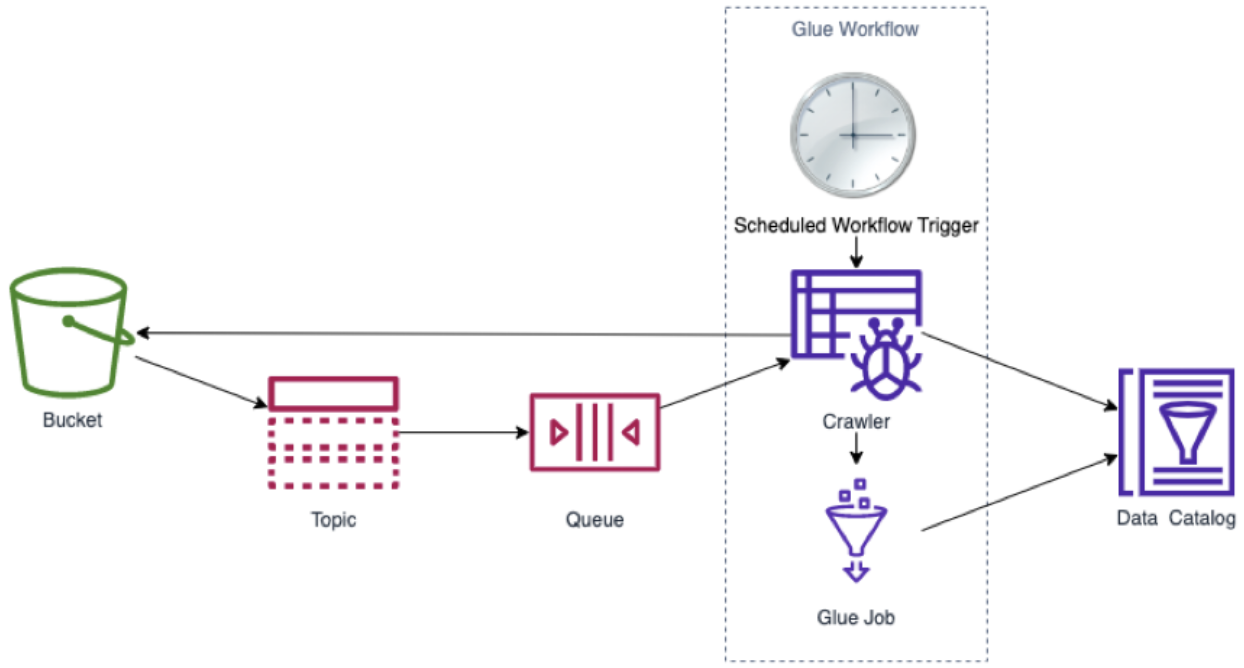
Here is a look at what is being deployed by this stack :
Install poetry:
curl -sSL https://install.python-poetry.org | python3 -
Create Python environment:
# The python version of this project is 3.10 or further.
poetry install
Activate the virtual environment:
poetry shell
Deploy the stack containing the crawler, a bucket and a Glue workflow to run the crawler:
# It is assumed that you have valid AWS credentials
cdk deploy
To test the solution, you can upload a json (for example example_json) in the bucket:
aws s3 cp example_json s3://<your bucket name>
Then run the Glue Workflow a first time. For the following commands, the name of the workflow and of the crawler are displayed as output of the stak
aws glue start-workflow-run --name <your workflow name>
To see the results of this first launch:
# This command might fail at the beginning as the log group has to be created the first time the crawler is launched
aws logs tail /aws-glue/crawlers --log-stream-names <you crawler name> --follow
If all went right, you should have something like that:
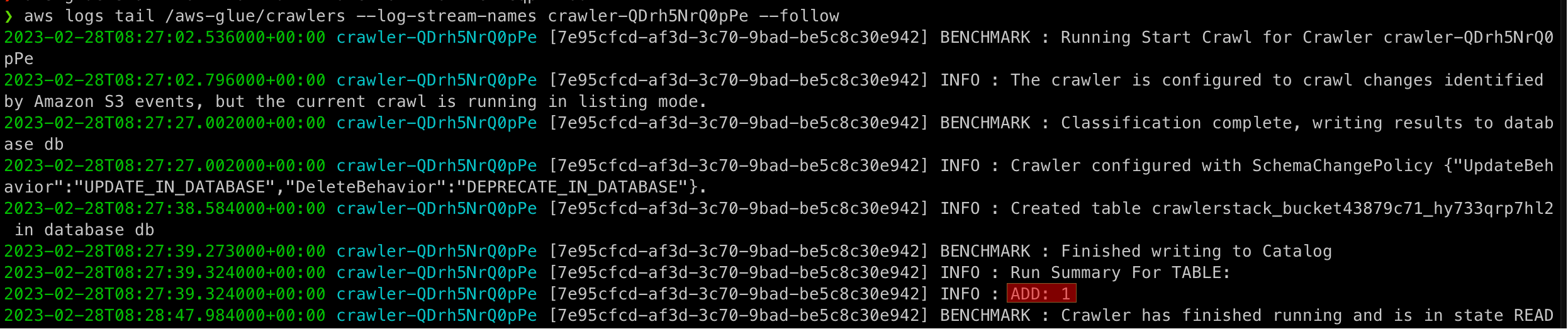
You can then redo these two commands to see what the second execution is doing
aws glue start-workflow-run --name <your workflow name>
aws logs tail /aws-glue/crawlers --log-stream-names <you crawler name> --follow
Now the number of unique events should be 0 and the crawler should have done nothing:

To then delete the stack :
cdk destroy