It's designed to be used in ACL (Access Control List) systems, where you need to check if a user has access to a resource.
(@record.published || @record.owner == @req.user.id) // Normal case
|| // Or operator
(@req.user.role == 'admin' || @req.user.id in @record.granted) // Special case
Let's break it down:
@req.user.role == 'admin': Check if the user has the role ofadmin.@req.user.id in @record.granted: Check if the user's id is in thegrantedlist of the record.@record.published: Check if the record is published.@record.owner == @req.user.id: Check if the record's owner is the user.
The above example is a simple ACL system that checks if the user has access to a record.
More language details can be found in LANG.md.
json(enabled by default)yamltoml
At least one input format feature must be enabled. The default configuration enables json.
package main

import (
    "fmt"

    "gqcl"
)

func main() {
    expr, err := gqcl.Parse("@req.user.role == \"admin\" || @record.published")
    if err != nil {
        panic(err)
    }

    ctx := gqcl.FromInterface(map[string]any{
        "req": map[string]any{
            "user": map[string]any{
                "role": "admin",
                "id":   "u1",
            },
        },
        "record": map[string]any{
            "owner":     "u2",
            "published": false,
            "granted":   []any{"u3", "u1"},
        },
    })

    val, err := expr.Eval(ctx)
    if err != nil {
        panic(err)
    }

    fmt.Println(val.String()) // true
}cat context.json | go run ./cmd/qcl "@req.user.id == 'alice' || @record.published"
cat context.yaml | go run ./cmd/qcl --yaml "@roles.0 == 'admin'"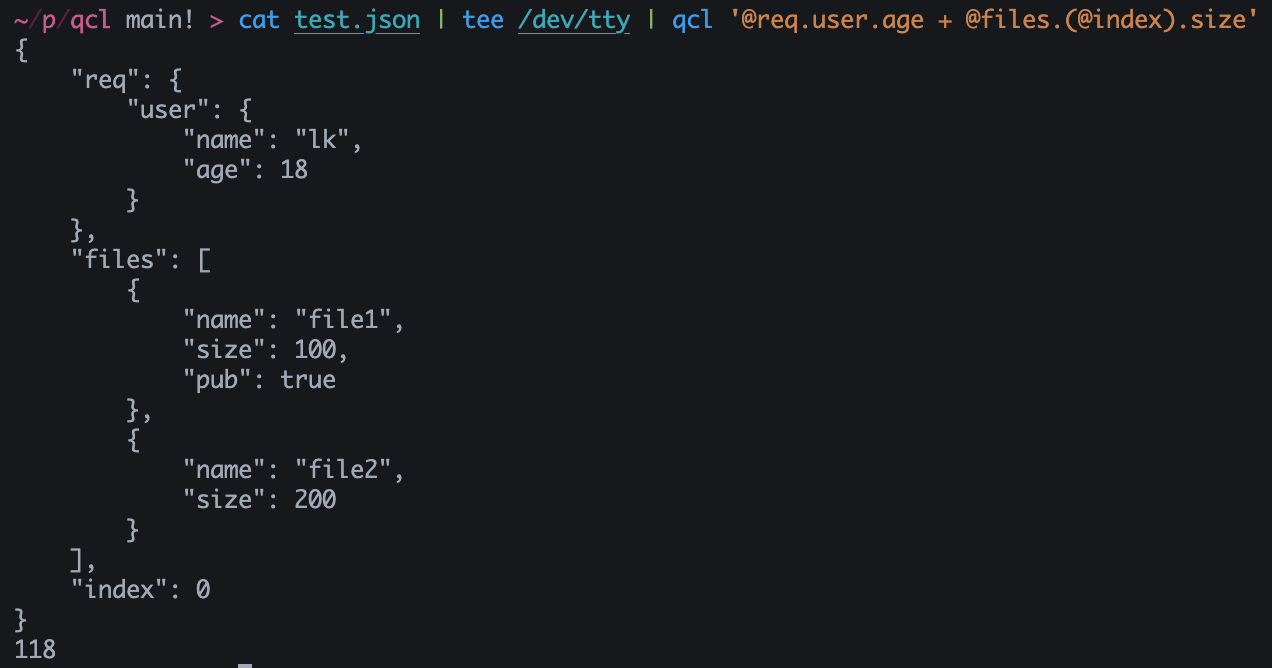
Apache-2.0 lollipopkit