[RFC ember-data] modelFactoryFor#372
Conversation


|
Could this work side by side with the alternative method? |

|
@knownasilya yes of course :) |
|
We discussed this on our weekly meeting and decided to put this RFC on hold for 2 weeks until the Ember f2f in Chicago after EmberCamp. @dgeb will champion discussion on improving Ember's DI / spec'ing Additionally, we should verify that |
|
After further discussion, we've update the proposal with the expected requirements for custom classes and use of |

| } | ||
| ``` | ||
|
|
||
| Users interested in providing a custom class for their `records` and whom override `modelFactoryFor`, |

| Custom classes for models should expect their constructor to receive a single argument: an object with *at least* | ||
| the following. | ||
|
|
||
| - A `recordData` instance available on the `recordData` `Symbol` and accessible via `getRecordData` (see below) |
There was a problem hiding this comment.
I'd recommend not mentioning the Symbol, or rephrasing to make it clear that it's an implementation detail and not part of the contract.
eg
- A
recordDatainstance accessible viagetRecordData(createArgs)
|
|
||
| - A `recordData` instance available on the `recordData` `Symbol` and accessible via `getRecordData` (see below) | ||
| - Any properties passed as the second arg to `createRecord` | ||
| - An `owner` available on the owner `Symbol` and accessible via `Ember.getOwner` |
There was a problem hiding this comment.
I don't think the Ember.getOwner docs mention anything about a Symbol; let's just say the owner is accessible via Ember.getOwner
|
|
||
| If providing a custom class that does not inherit from `EmberObject`, you *MUST* either use `assign` (see example 2) | ||
| or `setRecordData` (see example 4) to add the symbol for the backing `recordData` instance onto your record instance. | ||
| If inheriting from `EmberObject` calling `super` with the `createArgs` is sufficient. |
There was a problem hiding this comment.
Why is it necessary for the record to have a backref to the record data?
We should certainly recommend that people do this, but I don't see why we should require it. I'd also recommend we make the public api here setRecordData and not allow the record data to be set via assign, to simply the docs if nothing else.
There was a problem hiding this comment.
@hjdivad implementations of Model and RecordData need to be able to convert from a record to a record-data when createRecord is called or when a relationship is mutated.
Overtime we may be able to loosen that requirement, although personally I think that even if no longer necessary it is a good one.
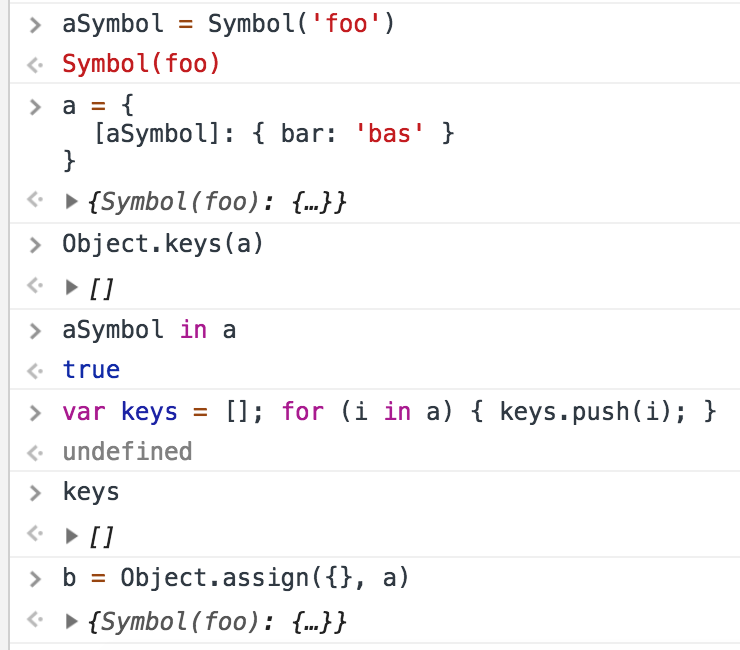
RE assign, since we are using a Symbol, Object.assign and the Ember polyfill "just work". Object.keys and for ... in do not work unless using Ember's Symbol polyfill.
There was a problem hiding this comment.
Yes, assign can work but it will be simpler if we have a single public API, setRecordData. assign works as a side effect of using a Symbol, but this is an implementation detail (you could imagine supporting the APIs with WeakMaps for instance).
@hjdivad implementations of Model and RecordData need to be able to convert from a record to a record-data when createRecord is called or when a relationship is mutated.
That's true for DS.Models but need not be the case for other model classes. That record.set('belongsToRelationship', otherRecord) invokes recordData.setBelongsTo is an implementation detail of DS.Model -- what part of the system necessitates that this is done by all model implementations?
I think it's important that we avoid these kinds of requirements to allow users an escape valve for relationship semantics when they need it.
There was a problem hiding this comment.
I think it's important that we avoid these kinds of requirements to allow users an escape valve for relationship semantics when they need it.
I feel as though we won't be able to have any-level of decent interop between various RecordData and Model implementations if we don't have this constraint. While I agree the existing relationship layer could (and should) be refactored to be less coupled, I think it's mechanics derives in part from the need for an interop story.
There was a problem hiding this comment.
Yes, assign can work but it will be simpler if we have a single public API, setRecordData. assign works as a side effect of using a Symbol, but this is an implementation detail (you could imagine supporting the APIs with WeakMaps for instance).
I can get behind this idea and will update the language.
There was a problem hiding this comment.
I think if we consider recordData as a "weak-mapped" thing (even if symbol based), we may be able to remove the requirement. Users would need to call recordDataFor on createArgs from within the constructor, but afterwards we could weakMap to the instance or symbolicate it ourselves and calls to recordDataFor on the instance would "just work"
There was a problem hiding this comment.
I feel as though we won't be able to have any-level of decent interop between various RecordData and Model implementations if we don't have this constraint. While I agree the existing relationship layer could (and should) be refactored to be less coupled, I think it's mechanics derives in part from the need for an interop story.
That interop should be driven by RecordDatas; the relationships already deal with these objects and should be as indifferent as can be to the particular records associated with some particular RecordData.
There's no dispute that RecordDatas need to know what record to return at various times: the basic mechanism of caching an invocation of factory.create(...) works well here. Model implementations can set up edges between RecordDatas via the public RecordData API. Why is that insufficient to achieve interop?
There was a problem hiding this comment.
@hjdivad because if you are a record and someone calls record.set with a different record then either the record or the record-data for the receiving record needs to be able to lookup the record-data instance associated with it. In absence of this ability, you end up needing to expose various other public interfaces to make things work. That said, I think the "weak-map after create" approach will allow us to make this work just fine.
There was a problem hiding this comment.
@hjdivad because if you are a record and someone calls record.set with a different record then either the record or the record-data for the receiving record needs to be able to lookup the record-data instance associated with it.
Sure, so it's recommended to setRecordData to achieve this. But that's not the same thing as it being required. In particular I don't think the rest of the system should assume that records (besides DS.Models) have a backref of any kind to their RecordData.


|
Discussed this at the core team meeting today, and we are moving this to final comment period. We'll aim to merge this next week, barring additional comments. |
|
As an update to this RFC, we landed an implementation only to discover several fatal flaws when interopiing with Ember's object factories that lead to a revert. A new approach is being drafted by @igorT, and this RFC should be considered dead |

4 participants


rendered