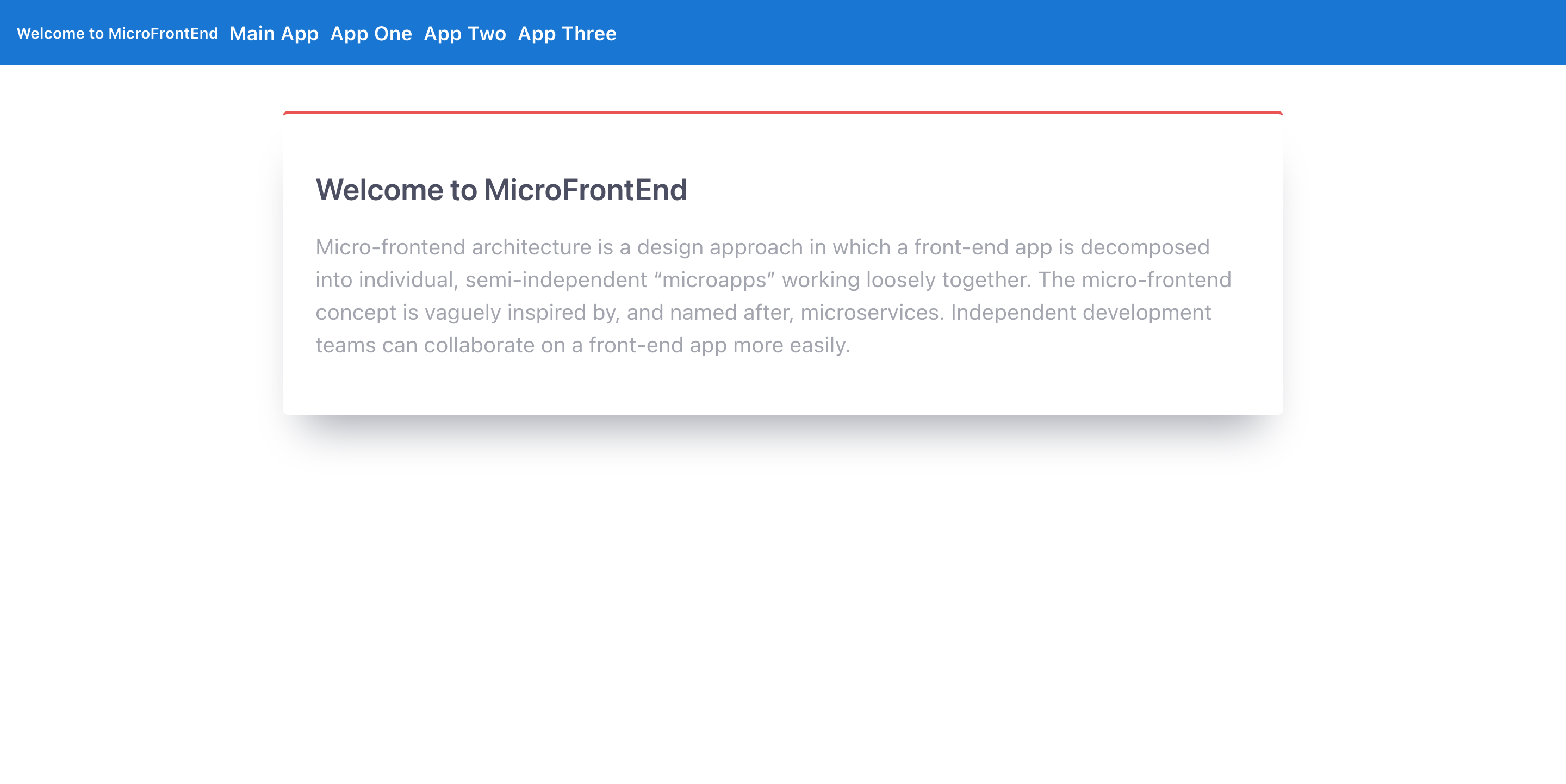
Micro-frontend architecture is a design approach in which a front-end app is decomposed into individual, semi-independent “microapps” working loosely together. The micro-frontend concept is vaguely inspired by, and named after, microservices.
- Micro-frontend architectures may be simpler, and thus easier to reason about and manage.
- Independent development teams can collaborate on a front-end app more easily.
- They can provide a means for migrating from an “old” app by having a “new” app running side by side with it.
Module Federation allows loading separately compiled and deployed code (like micro frontends or plugins) into an application. This plugin makes Module Federation work together with Angular and the CLI.
https://www.npmjs.com/package/@angular-architects/module-federation
npm i @angular-architects/module-federation
ng add @angular-architects/module-federation@next
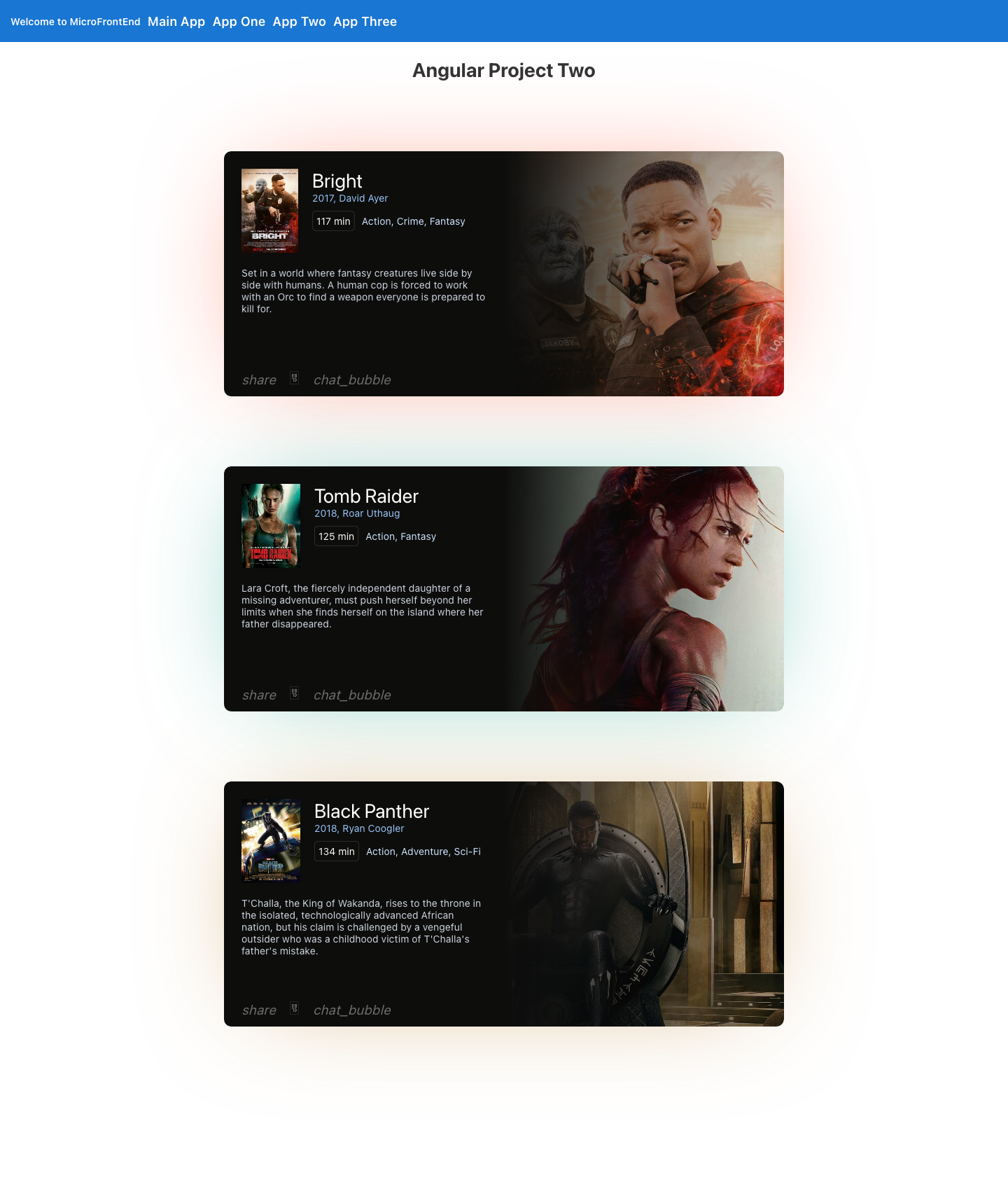
In this project, I have created three angular applications and one react application. which are shell, app one, and app two using angular and mfe4 using react
Shell application is the main application and all other applications are going to display under the main navigation bar.
App one is an angular application with routing enabled.
App two is a normal angular application.
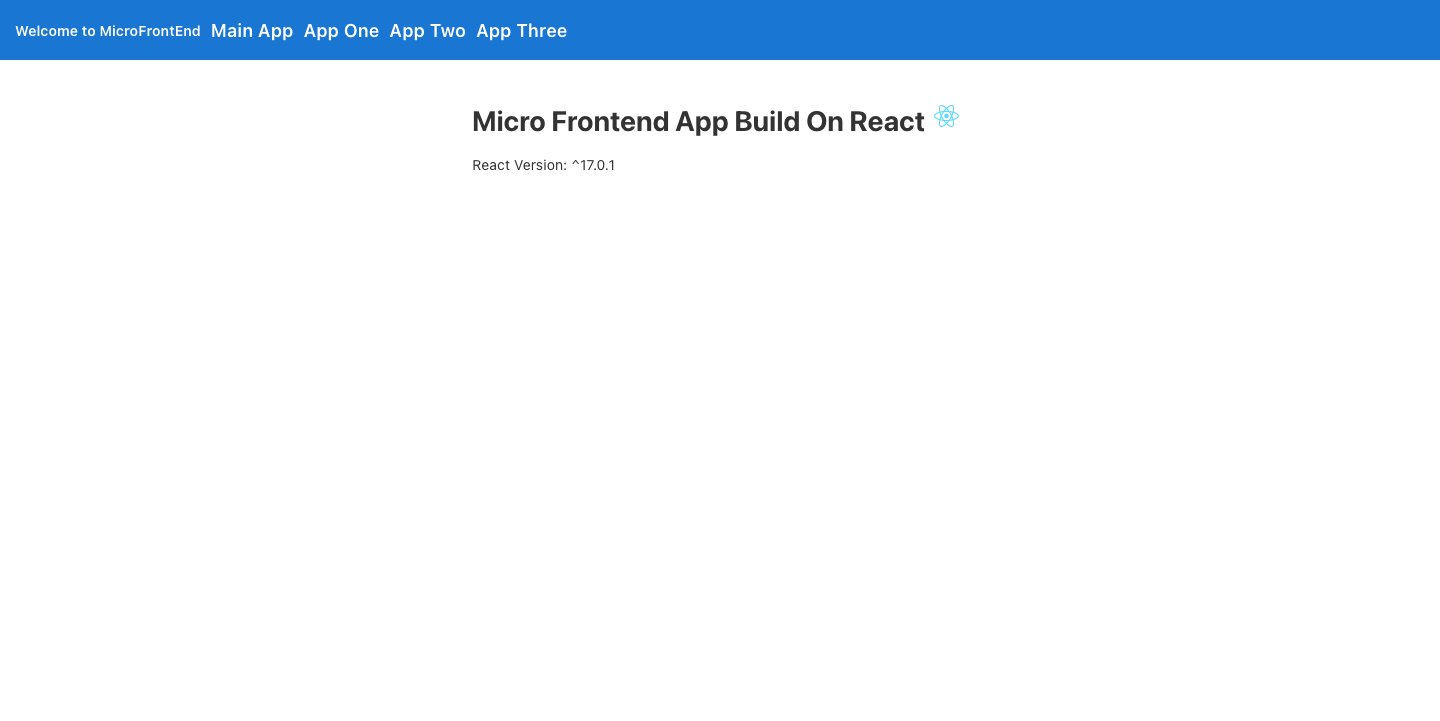
App three is a react application to show that other frameworks can also join together using micro frontend