




People-centered AI transformation leader building practical agentic systems, local AI, automation, and products that turn emerging technology into real outcomes.
I spend my professional life helping people and organizations adopt AI, and my personal lab is where I pressure-test the technology myself: building agents, local inference systems, voice interfaces, evaluation tooling, and working products.
Website · LinkedIn · Repositories
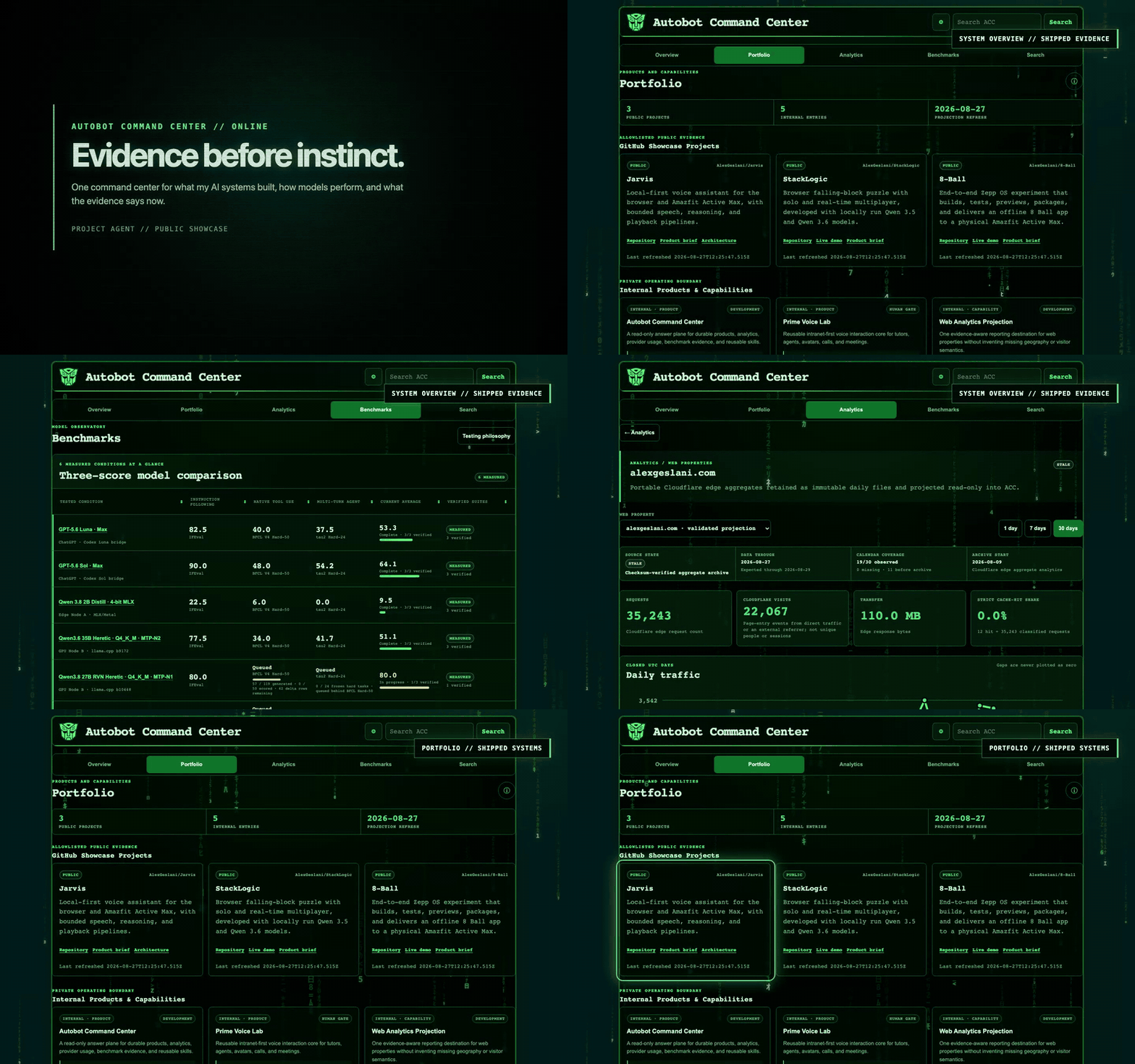
Evidence-backed command center for AI products, model evaluation, provider usage, and privacy-safe analytics.
A read-only evidence layer designed to keep provenance, freshness, uncertainty, and security visible. It distinguishes measured zeroes from missing data, preserves exact benchmark conditions, validates projections before publication, and fails closed rather than inventing confidence.
What it demonstrates: AI systems where evidence quality and operating boundaries remain first-class design concerns.
Repository · 68-second application showcase
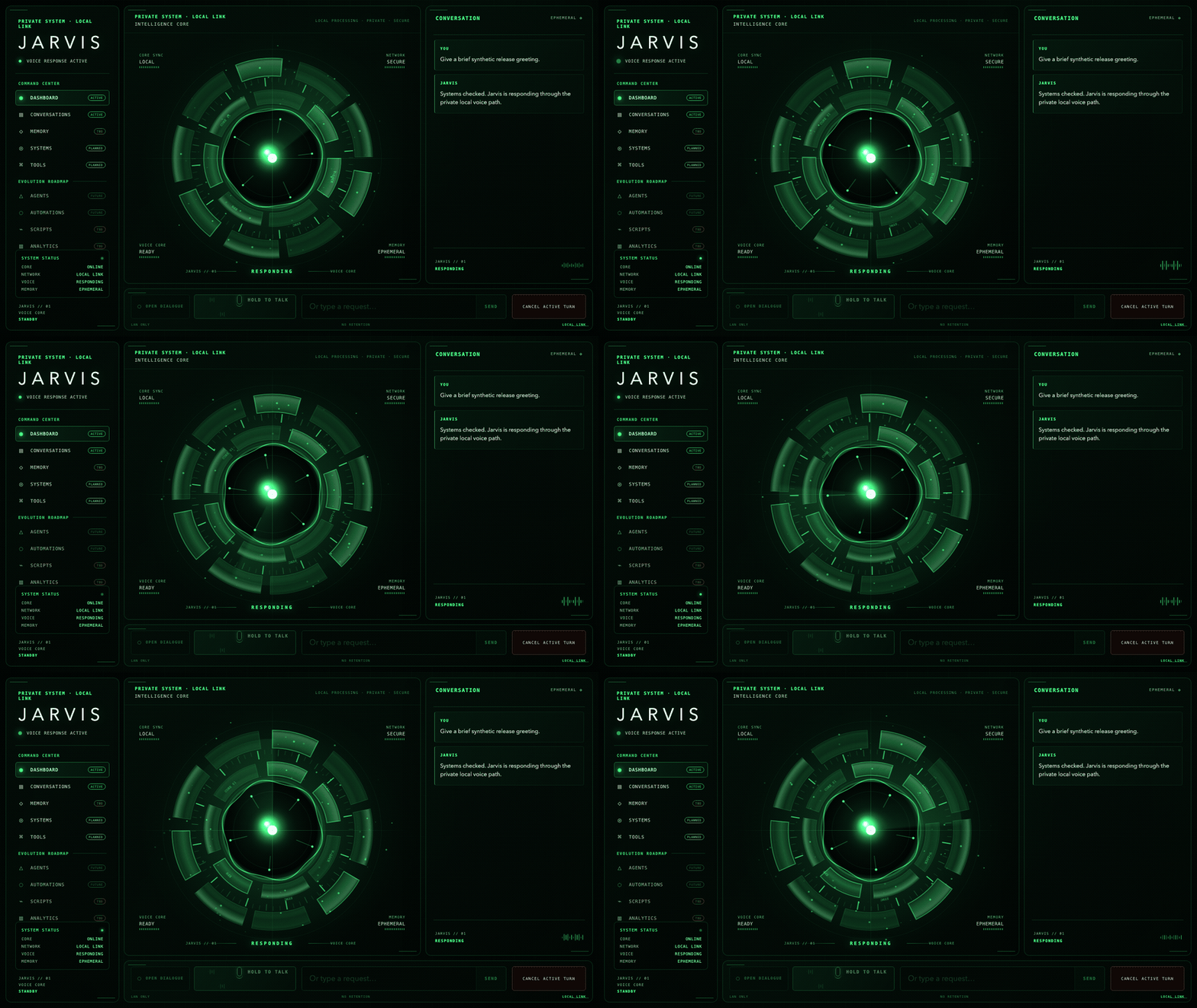
Private, local-first voice assistant spanning browser and physical wearable interfaces.
Jarvis combines local speech recognition, bounded reasoning, and speech synthesis behind a strict shared API for a browser cockpit and a real Amazfit Active Max client. Its n8n orchestration, explicit listening controls, ephemeral state, typed contracts, and fail-closed policy boundaries keep privacy and human control central to the experience.
What it demonstrates: local voice AI can move beyond a desktop prototype into a secured, tested, multi-interface product.
Repository · Architecture · 72-second application showcase
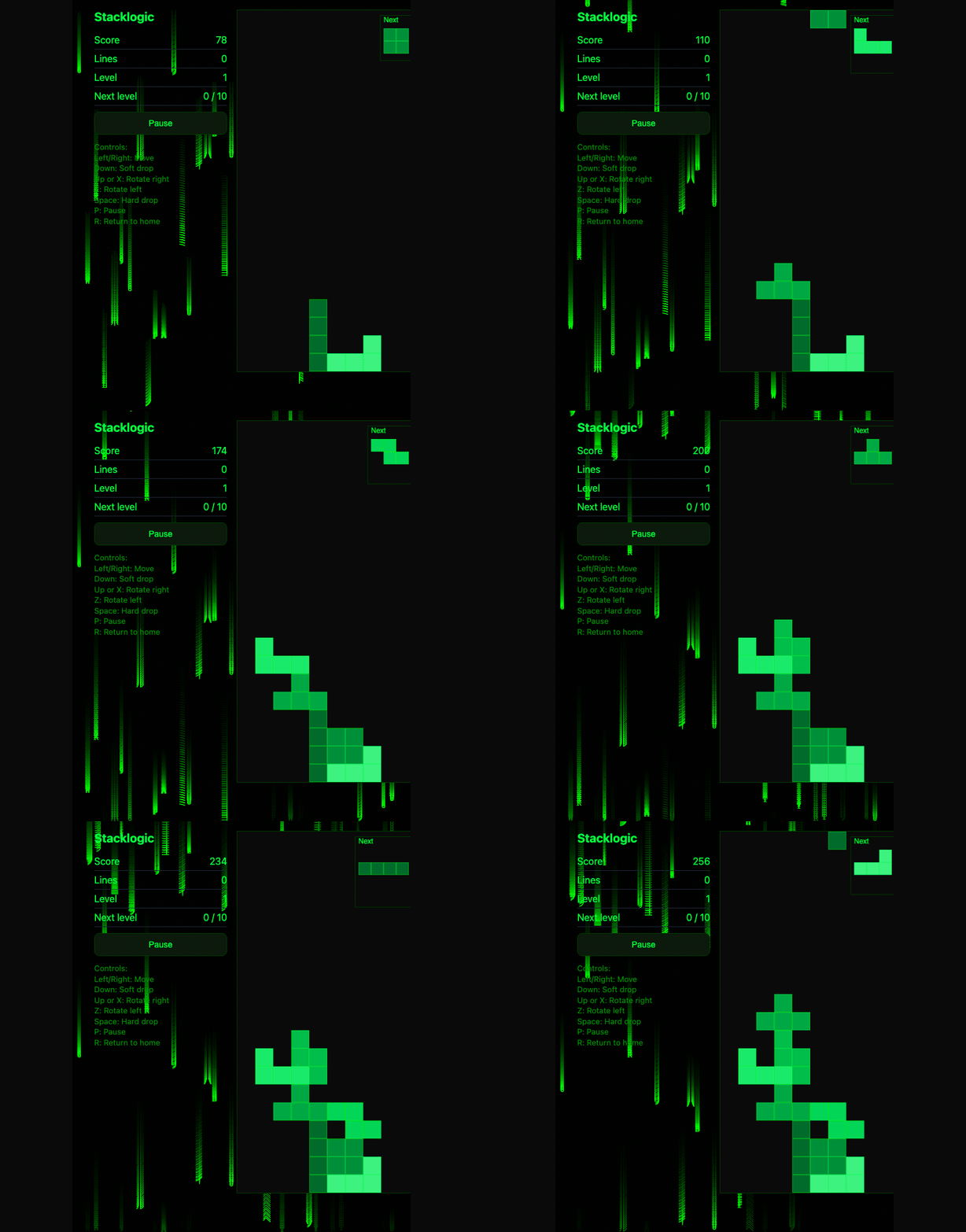
Deterministic browser game and real-time multiplayer experiment developed substantially with locally running AI coding models.
StackLogic pairs a reproducible falling-block game core with solo play, seeded matches, authoritative multiplayer state, responsive keyboard and touch controls, accessibility behavior, and a public browser deployment. Qwen 3.5 and Qwen 3.6 models running on local hardware provided substantial coding assistance.
What it demonstrates: local AI-assisted software engineering can produce a tested, deployable conventional application—not just another AI demo.
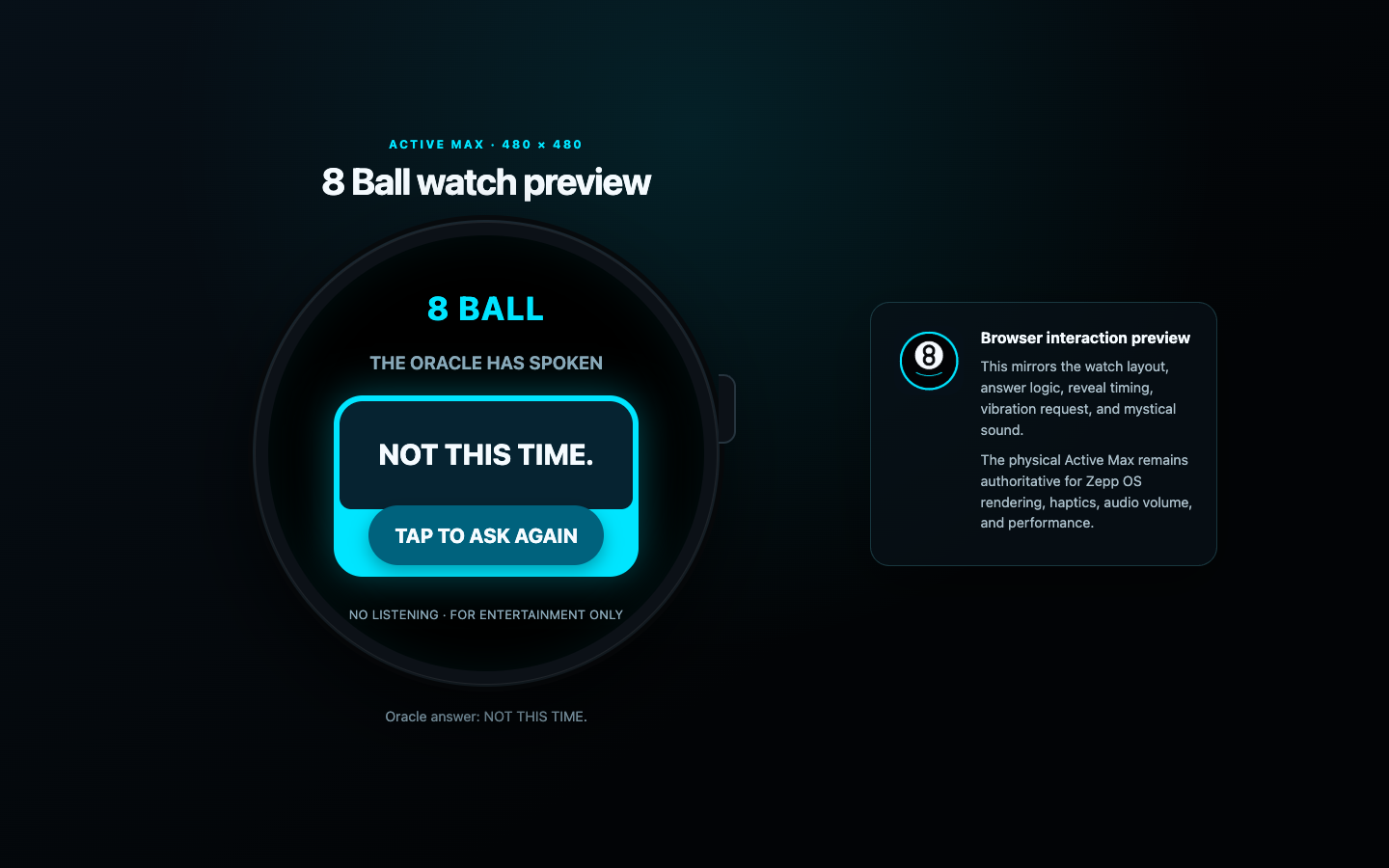
A deliberately bounded application proving the complete Zepp OS delivery path.
The app itself is intentionally small: shared answer logic powers both a browser interaction preview and the native watch experience. The larger experiment covers deterministic tests, CI, Zeus package generation, temporary device preview, tagged releases, and acceptance on a physical Amazfit Active Max.
What it demonstrates: end-to-end delivery and edge-device experimentation without overstating the product's complexity.
Repository · Open the browser preview
- Local-first where it materially improves privacy, cost, or control
- Human-in-the-loop for consequential actions
- Explicit security and trust boundaries
- Measurable evidence over vibes
- Simple systems before unnecessary infrastructure
- Ideas should end as working artifacts
Agentic systems and orchestration · local model evaluation and routing · voice and edge AI · secure automation · human-centered AI adoption
Selected work uses publicly released, sanitized project media. Private deployment configuration, credentials, raw telemetry, and internal operating architecture are intentionally excluded.