This is a small non-blocking TCP chat server in C.
It listens on 127.0.0.1 and allows multiple clients to communicate with each other using socket multiplexing via select().

-
Let multiple clients connect to my server on 127.0.0.1 (localhost) on a specific port.
-
Give each client a unique ID.
-
Allow clients to send messages to the server.
-
The server broadcast messages to all other clients in real time.
-
Inform clients when someone arrives or leaves.
-
Handle multiple clients without using threads (via
select()).
-
Low-level network programming in C (sockets, TCP/IP).
-
Event-driven programming using select() instead of threads.
-
Buffering and handling partial messages (clients can send messages in chunks).
-
Non-blocking I/O and why monitoring read/write readiness is important.
-
Chat apps, game servers, or real-time services work behind the scences.
                                +--------------------+
                                |   socket / bind /  |
                                |       listen       |
                                +--------------------+
                                          |
                                          v
                                +--------------------+
                                |    Start Server    |
                                +--------------------+
                                          |
                                          v
                                +--------------------+
                                |      Main Loop     |
                                |       select()     |
                                +--------------------+
                              /                        \
                             /                          \
              +----------------+                      +--------------------+
              | New connection |                      | Client socket ready|
              |   (listen fd)  |                      | (recv/send)        |
              +----------------+                      +--------------------+
                      |                                          |
                      v                                          v
            +--------------------+                    +----------------------+
            | - accept() client  |                    | recv() message       |
            | - assign ID        |                    | or detect disconnect |
            +--------------------+                    +----------------------+
                      |                                    |             |
                      v                                    v             v
      +------------------------- +       +-------------------+         +-------------------+
      |      Notify other        |       | broadcast message |         | If disconnected:  |
      |          clients         |       |         to        |         |  - close fd       |
      | "client X just arrived"  |       |   other clients   |         |  - notify clients |
      +--------------------------+       +-------------------+         +-------------------+
accept(), atoi(), bind(), close(), exit(), listen(), memcpy(), memset(), recv(), select(), socket(), strlen(), write().
An Http server will depend on sockets to transfer the requests & responses between the client and the server, so understanding how Tcp works behind the scenes is considered a foundational step toward understanding and building HTTP servers.
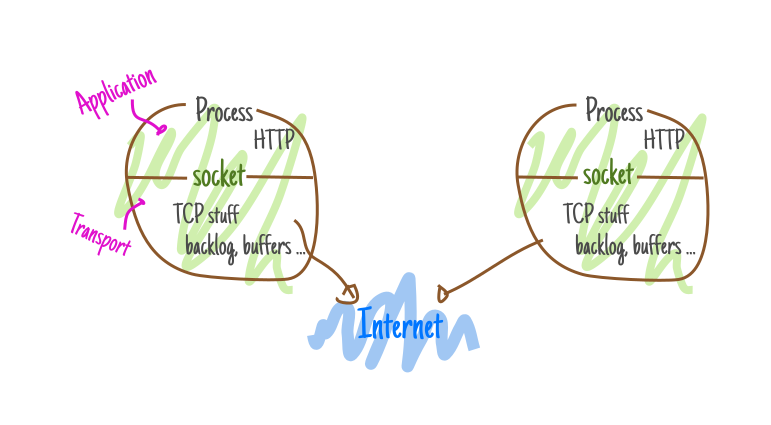
By working with raw TCP sockets, you gain hands-on experience with:
- Socket Programming: Learn how to create, bind, listen, and accept connections.
- Multiplexing: Use
select()to handle multiple clients simultaneously, a core concept for scalable servers. - Message Framing: Understand how to parse and assemble messages, which is essential for handling HTTP requests and responses.
- Client Management: Track connected clients, manage their state, and broadcast messages—skills directly transferable to HTTP session handling.
cc -Wall -Wextra -Werror tcp_server.c -o tcp_server && ./tcp_server <port>
You can open a client on the server using nc(netcat):
nc 127.0.0.1 8080
Open multiple terminals to simulate multiple clients.
Now type a message from a client — it gets broadcasted to the other clients, enjoy ;).